How Fabric Banners Elevate Booth Design and Audience Engagement
Trade shows and live events are noisy and fast paced, so you need display solutions that stand out quickly and reliably. Fabric banners deliver bold visual presence while remaining lightweight, portable, and easy to integrate with other booth elements. As a category, fabric banners give you flexible options to shape visitor journeys, reinforce brand identity, and improve audience engagement throughout an event.
General information about fabric banners
Fabric banners are printed textile displays usually mounted on lightweight frames or tension systems. Because they use dye-sublimation printing on polyester knit or stretch fabrics, they reproduce vivid colours and crisp detail. Consequently, they are ideal for large-format graphics that must remain wrinkle-free and vibrant under exhibition lighting. Furthermore, fabric banners are available in modular sizes and shapes, which makes them suitable for both small kiosks and large double-deck stands.
Product category advantages in exhibition settings
Fabric banners are attractive for several reasons. First, they create a premium look that improves perceived brand quality. Second, they are easy to transport and store, so logistics become simpler and cheaper. Third, because they mount to simple frames, they allow fast setup and breakdown, which saves time at busy shows. Moreover, their soft surface reduces reflections, and therefore graphics remain legible from multiple angles, increasing the chance that passing attendees will stop and engage.
Specifications and material quality
Typical fabrics include polyester knit for tension frames and stretch polyester for curved systems, with flame-retardant options for venues that require certification. Standard printing uses dye-sublimation ink for full-colour coverage and long-lasting vibrancy. In addition, frames are usually aluminium for strength and low weight, and replacement graphics are available if you want to refresh messaging while reusing hardware. As a result, you can scale investments across shows without repeating the full outlay every season.
Use cases and creative uses of multiple products
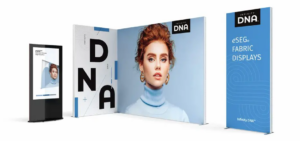
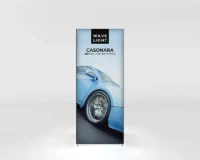
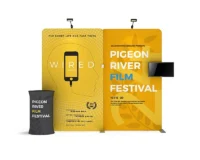
At trade shows, use a large tension fabric backdrop to anchor your space and pair it with a curved pop-up banner to create a welcoming entry. For retail experiences, suspend fabric banners from the ceiling to guide customers to promotions. For product launches, combine multiple banner sizes and floor graphics to create a branded pathway that directs traffic to demo stations. Additionally, professional photographers and event producers often use fabric banners as seamless backdrops because they absorb light and avoid glare, which improves image quality for social sharing.
Creative combinations to maximize impact
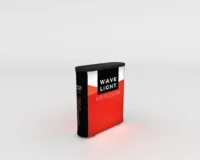
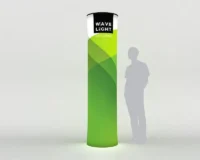
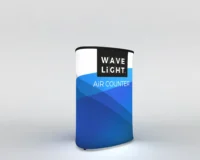
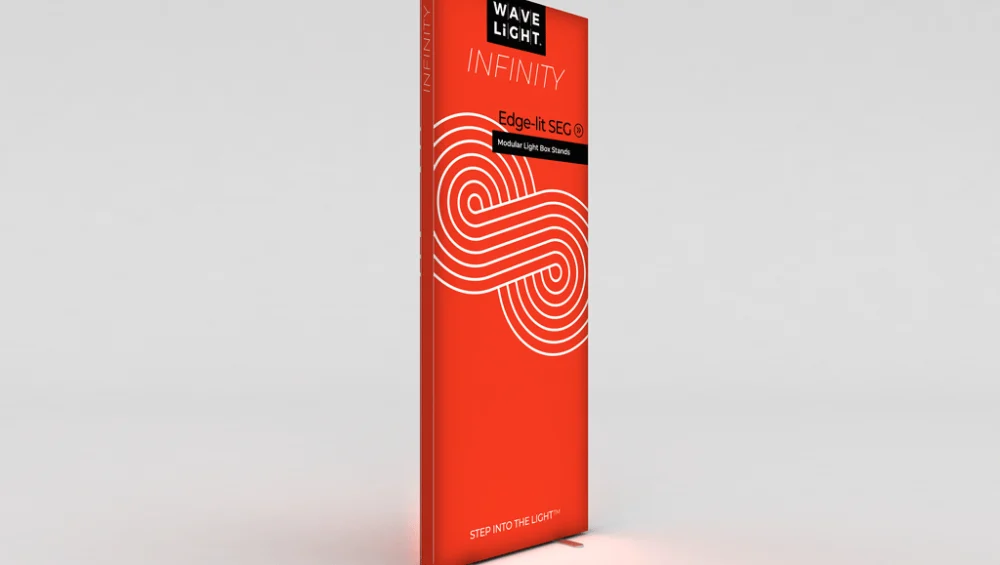
Combine a tall straight banner with a curved island display to create depth, and then add a branded counter or literature stand to encourage conversation. Next, layer graphics with complementary colour palettes so messaging reads clearly from a distance, and then use smaller tabletop banners for close-up product details. By mixing sizes and formats, you can design a booth that guides visitors naturally through key product zones, thereby increasing meaningful interactions.
Components, setup process, and portability
Most fabric banner systems include the following components: aluminium frame, printed fabric graphic, carry bag, and optional lighting. Setup usually involves snapping or slotting frame sections together, stretching the printed fabric over the frame, and securing silicone edges or hook-and-loop fasteners. Because assembly is tool-free in many systems, one person can typically set up a medium-sized display in under 15 minutes. Consequently, this category reduces labour costs and allows you to respond quickly to last-minute venue changes.
Integration with booth design and traffic flow optimization
Fabric banners integrate smoothly with furniture, demo stations, and digital displays. Therefore, you can use them as focal backdrops, directional signage, or subtle brand accents. Consider sight lines and aisle approaches when positioning banners so that messaging becomes readable before visitors arrive at your stand. Then, place curved displays or angled banners to create natural pathways that encourage exploration, which ultimately leads to longer dwell times and higher quality conversations.
Conclusion
Fabric banners are a versatile category that blends aesthetic appeal with practical advantages. They enhance brand presence, simplify logistics, and support creative booth configurations that guide visitor behaviour. When combined thoughtfully with other display elements, fabric banners turn ordinary spaces into memorable brand experiences that drive engagement and leads. When you are ready to explore options and find systems that match your booth goals, explore the fabric banners range to discover how this system can help you elevate your booth design and audience engagement and achieve the results your brand deserves.