Maximising ROI with Durable and Reusable Fabric Banners
Fabric banners are a versatile category of exhibition signage that deliver strong return on investment for brands that exhibit repeatedly. By combining durable materials, easy graphic updates, and lightweight portability, the category helps teams reduce long-term costs while improving event performance. Below, discover how fabric banners work across specifications, use cases, and practical setups to protect your budget and amplify your presence.
General Information
Fabric banners include a range of systems designed for trade shows, retail displays, and events. Typically, they pair a reliable frame with printed fabric graphics that slip over or attach to the frame. Consequently, you get a display category that balances professional appearance with economical operation. Moreover, many fabric banners support interchangeable graphics, which means you can refresh messaging without replacing frames.
Design Features
Fabric banners stand out because of seamless print options, edge-to-edge colour, and wrinkle-resistant textiles. For example, dye-sublimated fabrics provide vibrant, long-lasting images that resist fading under exhibition lighting. Additionally, tension-fit systems keep graphics flat for a premium look, and modular frames scale to different sizes so you can match booth dimensions easily.
Material Quality
High-quality fabrics and anodised aluminium frames increase longevity and, therefore, ROI. Furthermore, breathable textiles are less prone to creasing when packed, and reinforced hems protect printed edges during transport. As a result, these material choices reduce replacement frequency and protect your investment across many events.
Portability and Setup Process
Fabric banners are intentionally lightweight and compact for easier shipping and storage. Consequently, shipping costs are often lower than for rigid displays, and team setup times are shorter. This ease of use reduces labour expenses at events. In addition, many systems include numbered parts and quick-attach fittings so one person can assemble a display quickly, which further improves per-event efficiency.
Use Cases
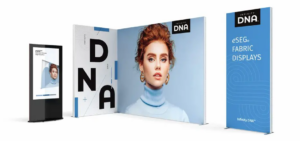
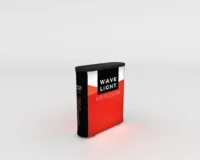
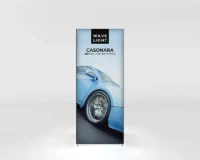
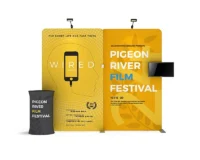
Fabric banners work well for trade shows, pop-up retail, product launches, and corporate events. For instance, you can use large tension fabric backdrops for immersive brand moments, while smaller pop-up fabric stands highlight product features at a counter. Also, because graphics are exchangeable, you can tailor displays for specific campaigns without purchasing new frames.
Product Category Advantages
Choosing fabric banners as a category delivers several advantages. First, they lower total cost of ownership through reusability and replaceable graphics. Second, they offer consistent visual quality that supports premium brand perception at events. Third, they are adaptable to changing booth layouts and marketing needs, which means your investment remains relevant as strategies evolve.
Creative Uses of Multiple Products in the Category
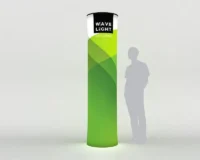
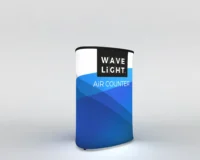
Combine fabric banners with other display types to create layered, experiential booths. For example, use a large fabric backdrop for branding, flanked by pop-up fabric stands for product details, and pair them with fabric-wrapped podiums for interactive demos. This modular approach lets you scale presence and reuse common components, which increases flexibility and maximises value across campaigns.
Conclusion
In summary, the fabric banners category is built to maximise ROI through durable construction, reusable graphics, and efficient logistics. Therefore, teams that invest in quality fabric systems reduce per-event costs, keep messaging fresh, and maintain a strong visual presence. When you plan exhibition strategy with lifecycle value in mind, fabric banners deliver measurable benefits that support both short-term campaigns and long-term brand goals.
Explore the fabric banners range to discover how this system maximizes ROI and helps you achieve superior results while protecting your exhibition budget.