From Case to Floor: Assembling WaveLine® Monolith Displays On-Site
Setting up a professional exhibition quickly matters, and WaveLine® Monolith Displays are designed to deliver fast, reliable results. This guide walks you through how the product moves from case to floor, and it highlights the features that make on-site assembly straightforward. Consequently, you can reduce setup time and present a polished brand environment with confidence.
General Information
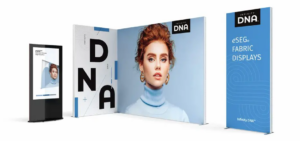
WaveLine® Monolith Displays are modular exhibition systems built for repeat use and consistent visual impact. They combine rigid frames, stretch fabric graphics, and stable bases to create uninterrupted graphic walls. As a result, the system is ideal for trade shows, retail activations, and corporate events where appearance and speed matter.
Specifications
Key specifications define what to expect from each WaveLine® Monolith Display. Typically, the system includes precision-cut aluminum frames, tension fabric graphics sized to fit each frame, and weighted base plates for stability. Moreover, the modular frame sections are engineered to lock together securely, and the fabrics are printed with dye-sublimation for vibrant, long-lasting color. Therefore, exhibitors gain a balance of lightweight transport and professional presentation.
Product Highlights
What makes WaveLine® Monolith Displays stand out is their blend of simplicity and premium finish. First, the stretch fabric slips over the frame for a seamless graphic without visible fasteners. Second, the base assembly is quick and creates a solid foundation for multiple units to join into continuous walls. Finally, the system supports single-person handling in many cases, so staffing needs are minimized while setup time is reduced.
Components
Each kit includes several user-friendly components. There are numbered frame sections for intuitive assembly, base plates with secure connections, pre-printed fabric graphics, and protective cases for transport. In addition, accessories such as stabilizer feet and connector pins allow you to configure runs of displays that stay square and true on the show floor. As a result, every part plays a role in efficient on-site assembly.
Design Features
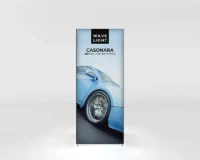
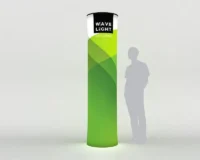
The design emphasizes clean lines and a tensioned surface that showcases graphics without wrinkles. Furthermore, the frames are engineered to hide seams where panels meet, which creates a continuous brand presentation. The system also supports backlit options in some configurations, and therefore you can enhance visual impact depending on venue lighting and marketing goals.
Portability and Case Organization
Transport is simplified because components pack into purpose-built cases. These cases organize frame segments, hardware, and fabrics so that unpacking is quick and error-free. Consequently, when you arrive on-site you can inventory parts immediately and begin assembly without searching for missing pieces. The case-to-floor workflow saves time and reduces stress during event setup.
Setup Process and On-Site Assembly
The typical setup sequence moves from case unpacking to base installation, frame connection, fabric fit, and final graphic adjustment. First, place base plates and lock them. Next, assemble frames section by section and attach them to the bases. Then fit the stretch fabric over the completed frames and smooth the textile for a taut finish. Finally, align adjacent units and secure connectors for runs that read as a single large graphic. Because the steps are logical and repeatable, teams can achieve consistent results even under time pressure.
Conclusion
WaveLine® Monolith Displays deliver a case-to-floor experience that balances speed, durability, and presentation quality. They are particularly well suited for teams that need reliable, repeatable setups while maintaining a high-end visual. For these reasons, exhibitors appreciate how the system reduces setup time and enhances brand impact. Discover how WaveLine® Monolith Displays assemble on site and how this system can simplify your exhibition preparation.