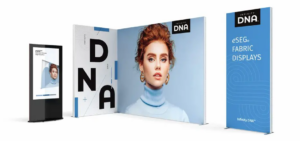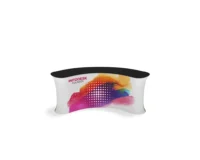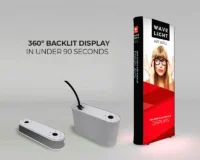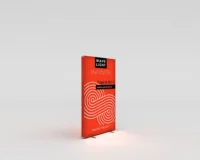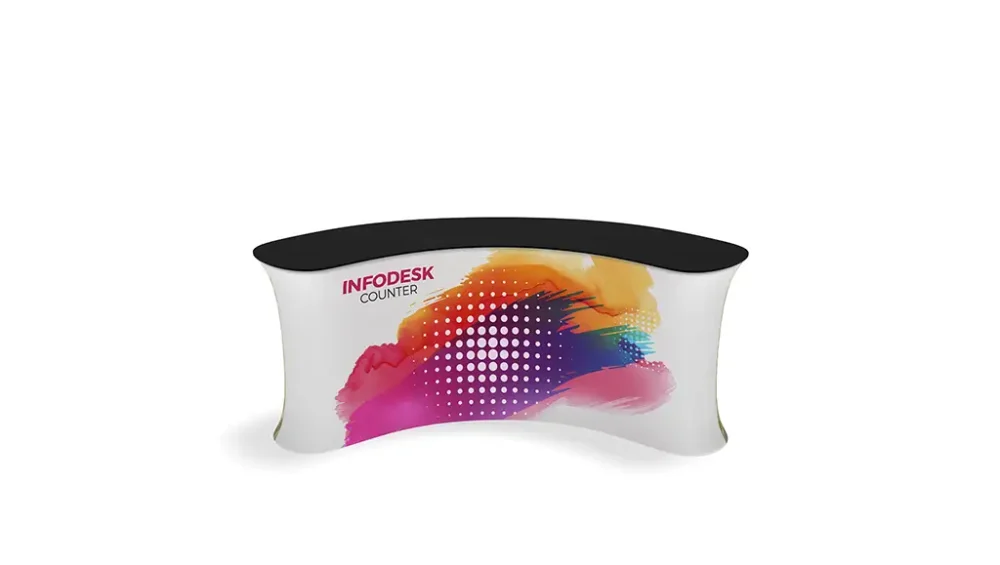
Lightweight WaveLine® InfoDesks are rapidly becoming a strategic fixture for UK event organisers under pressure to deliver more impact with leaner budgets, shorter build windows, and stricter sustainability targets. As venues compress loading schedules and clients demand measurable ROI, organisers need counters that are fast to deploy yet still feel permanent and premium. This is shifting the market away from one-off timber builds towards agile systems that can be reconfigured, rebranded, and redeployed across entire event programmes.
Lightweight counter systems are no longer just a logistical convenience; they are an operational and brand asset that can materially improve event performance.
The strategic value of lightweight event counters
For many UK organisers, counter infrastructure has historically been an afterthought, often resolved with generic hire stock or ad-hoc builds. The current climate of rising labour costs, limited storage, and environmental scrutiny is forcing a more strategic view. Lightweight event counters reduce reliance on specialist contractors, enabling in-house teams or brand ambassadors to build and dismantle safely within minutes. This autonomy protects margins and provides a useful hedge when labour availability is tight or last-minute floorplan changes arise.
Operational agility across the event calendar
Forward-thinking agencies now treat counters as part of a modular event toolkit that travels with them from exhibition to conference to roadshow. Compact pack sizes, tool-free assembly, and durable frames allow teams to scale from a single welcome point to multiple portable exhibition desks with minimal additional planning. This is particularly important for brands running pan-European campaigns, where freight efficiency and predictable onsite set-up times are central to commercial viability and client confidence.
Designing for engagement and measurable outcomes
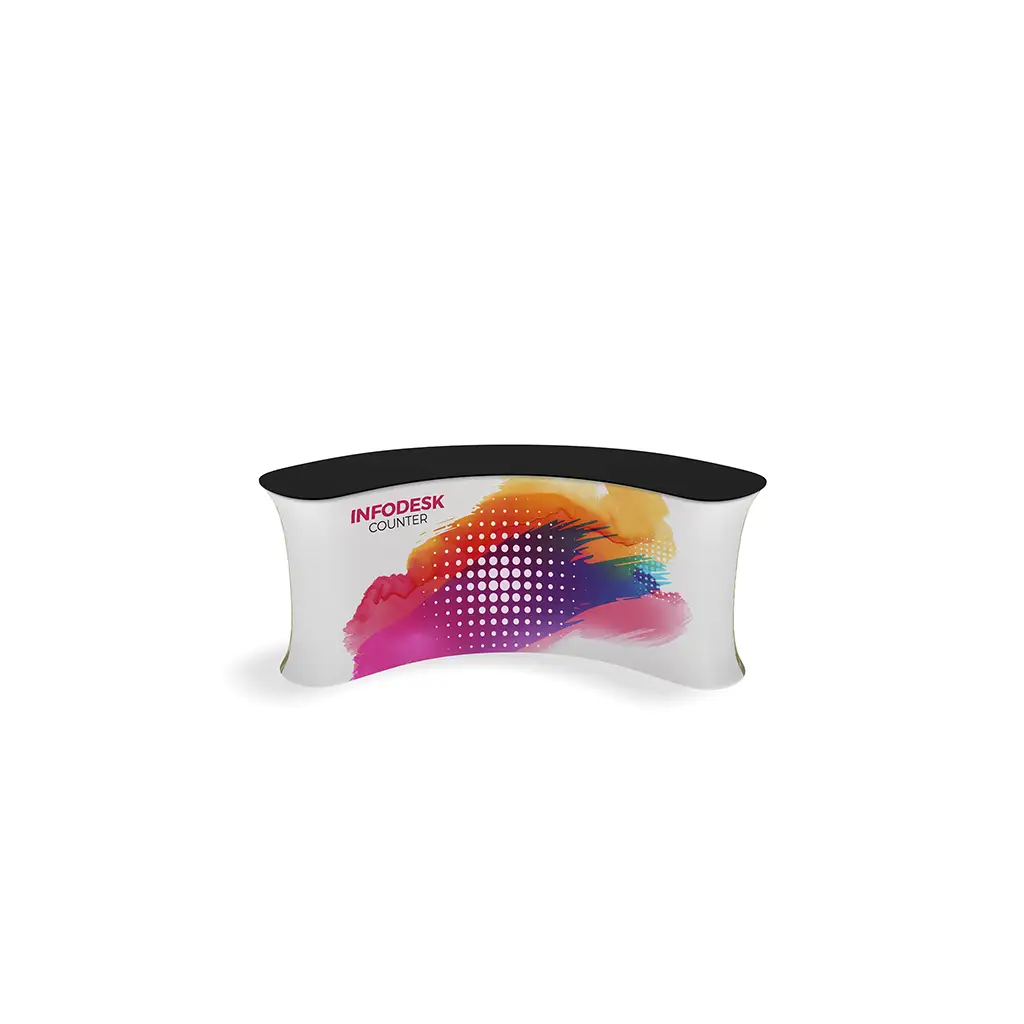
Well-positioned counters often form the first meaningful touchpoint for visitors, whether they function as trade show reception desks or guidance points in conference foyers. High-quality fabric graphics, considered cable management, and integrated shelving help counters behave as branded reception furniture rather than temporary props. By integrating digital lead capture, sampling, and literature display, organisations can turn custom branded info counters into measurable engagement hubs that support data-driven post-event reporting and long-term relationship building.
From a brand perspective, WaveLine® InfoDesks enable marketers to treat counter graphics like campaign media, refreshing creative without discarding the structural hardware. This approach extends the life of modular display counters while maintaining visual relevance across product launches or sector-specific events. When combined with portable information kiosks for self-service content and lightweight promotional kiosks for sampling, teams can orchestrate a coherent visitor journey that feels curated rather than cobbled together from hire stock.
Sustainability, cost control, and future-proofing
Procurement teams are increasingly scrutinising the carbon and waste implications of UK trade show counters, expecting suppliers to demonstrate reuse, recyclability, and responsible material choices. Investing in portable branded counters that can be re-skinned rather than rebuilt aligns with these expectations and reduces long-term ownership costs. For organisers managing multiple shows annually, standardising on a small family of custom display counters and portable exhibition desks simplifies logistics, training, and risk management while preserving creative flexibility.
Looking ahead, the most resilient event strategies will treat counters as a configurable platform rather than a fixed asset. Lightweight systems that can pivot from information point to demo station or hospitality bar will outperform single-purpose furniture in both utilisation and ROI. Event leaders reviewing their kit should map where lightweight event counters can replace ad-hoc builds, then phase investment across budget cycles. To explore how this approach could reshape your own event portfolio, start by auditing your current counter inventory, usage patterns, and hidden build costs.