Comparing Brandcusi® Counters to Traditional Exhibition Furniture is becoming a pressing question for UK marketers facing tighter budgets and higher expectations on the trade show floor. Across venues such as ExCeL London and Birmingham’s NEC, the exhibition counter is often the first fixed point where visitors actually stop, speak and share data. When that structure is flimsy, visually inconsistent or inconvenient to use, it quietly dilutes the impact of even the most high-quality trade show displays.
Why exhibition counters matter more than many UK marketers realise
For many brands, counters are still treated as basic lightweight exhibition furniture, chosen late in the planning cycle and driven mainly by price. Yet these fixtures anchor product demos, literature distribution and lead capture, shaping how organised and credible a stand appears. Poorly planned portable exhibition counters can slow staff, restrict conversation space and make it harder to manage queues, all of which chip away at the perceived professionalism of the brand.
The hidden limitations of traditional exhibition furniture
Traditional UK trade show counter solutions often rely on MDF panels, budget laminates and simple wraparound graphics that scuff or peel after a few events. Over time, this leads to mismatched colours, damaged corners and visibly patched sections that clash with carefully produced brand visuals. Many teams find themselves hiring extra units or buying last-minute compact promotional display stands to compensate, creating a fragmented and inconsistent presence across different shows.
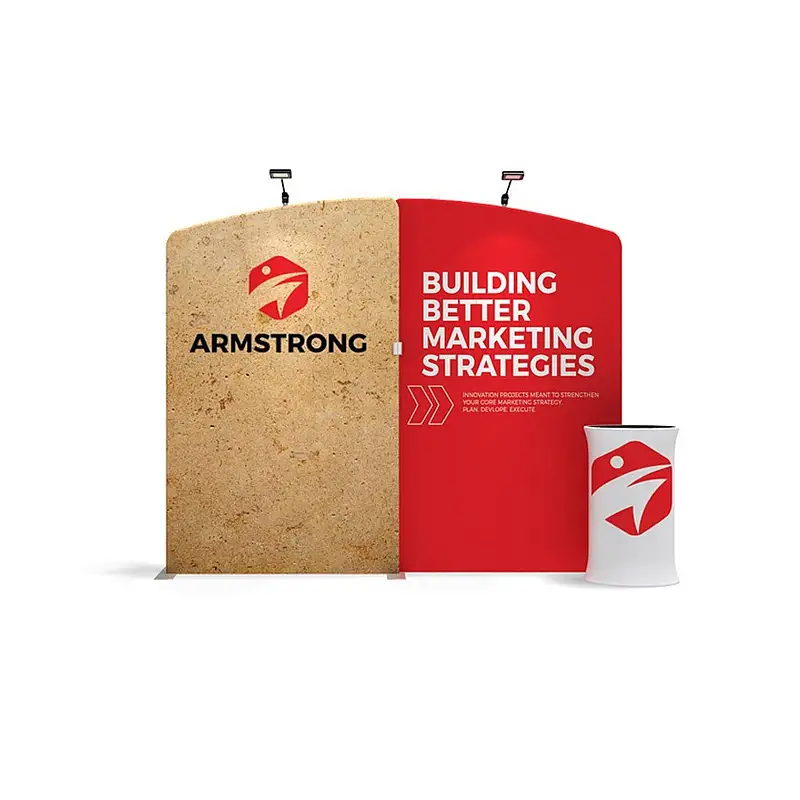
How modern counters expose legacy weaknesses
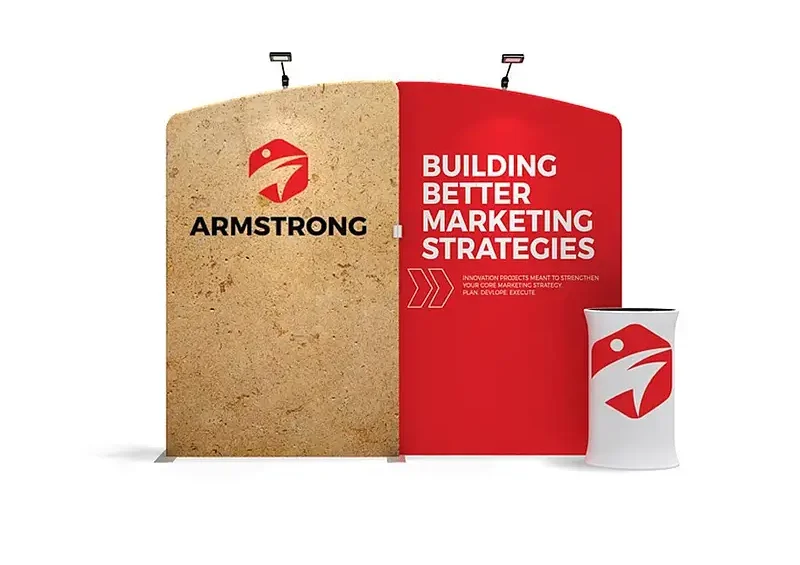
Newer solutions such as Brandcusi® Counters highlight where older systems fall short on durability, graphic quality and day-to-day usability. Aluminium structures, tensioned fabric skins and integrated shelving make it obvious how fragile cardboard-style units and basic graphic-wrapped sampling stations can appear under strong lighting. As visitors increasingly expect slick custom display counters, ageing kit can signal a brand that is behind the curve before staff even start their pitch.
- Frequent repairs, gaffer tape fixes or improvised supports beneath counter tops
- Staff reluctance to place laptops, samples or payment devices on wobbly surfaces
- Graphics that no longer match current campaigns, logos or colour palettes
- Insufficient internal storage forcing clutter onto the main worktop
- Difficulty transporting units compared with truly reusable event display counters
Ignoring these symptoms can turn each show into a cycle of short-term fixes, with teams hiring extra portable branded reception desks or modular branded counters simply to mask weaknesses. Over a full events calendar, this pattern can cost far more than a planned upgrade, while still leaving brands with tired-looking stands beside sharper, more coherent branded retail activation units. Before your next booking, review whether your counters still support your message or are quietly working against it.
If you recognise any of these issues, now is the time to reassess your exhibition counter strategy and align it with long-term objectives. Consider how your hardware copes with frequent UK travel, changing campaigns and evolving stand layouts, rather than just the next event. Speaking with an exhibition display specialist can help you benchmark options, compare traditional furniture with modern UK trade show counter solutions, and map a phased move towards more resilient, flexible counters. Take stock of your current setup today and seek expert guidance before hidden weaknesses turn into another year of missed opportunities on the show floor.