Infinity DNA™ Pro Lightboxes vs. Standard Lightboxes: Which Is Better?
In crowded UK exhibition halls and busy retail environments, illuminated graphics have become essential for brands trying to stand out. Choosing between advanced Infinity DNA™ Pro Lightbox systems and standard lightboxes is now a strategic decision that affects visibility, budget and long-term flexibility. Both options use LED technology, but they differ markedly in brightness consistency, modularity and ease of transport. For marketers weighing up solution options, the challenge is to balance impact with practicality, particularly when campaigns involve regular touring or frequent rebranding.
Understanding the role of exhibition lightboxes
Modern custom lightbox displays function as both signage and storytelling tools, guiding visitors towards key product messages and brand experiences. In trade shows, shopping centres and corporate foyers, they create consistent illuminated canvases that perform better than unlit posters under varying ambient light. For teams planning multi-stop campaigns across the UK, portable exhibition lightbox stands can also rationalise logistics by replacing bulky, traditional panels. As print, digital and social media channels converge, consistent backlit branding provides valuable assets for photography, video and livestreams.
How Infinity DNA™ Pro Lightbox systems work
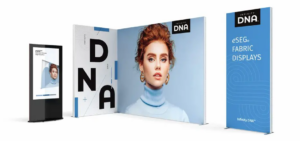
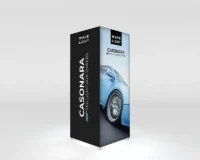
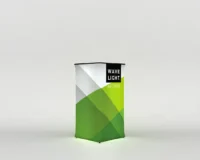
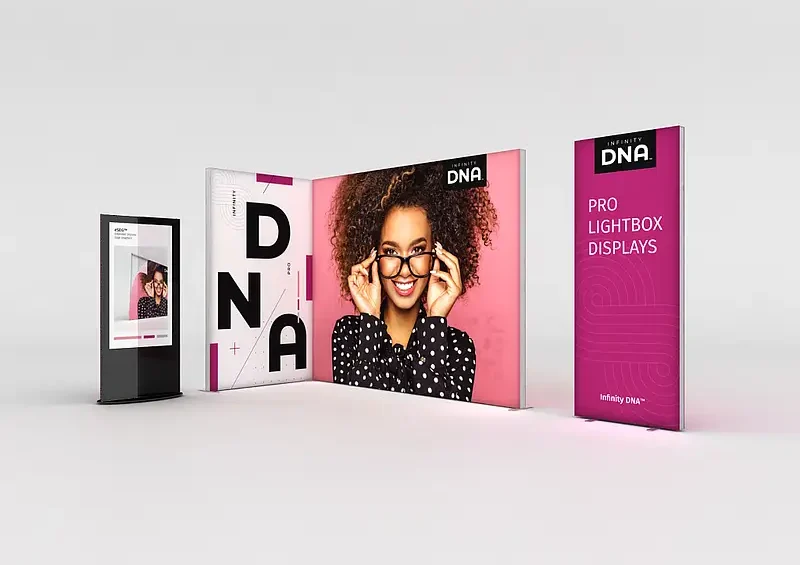
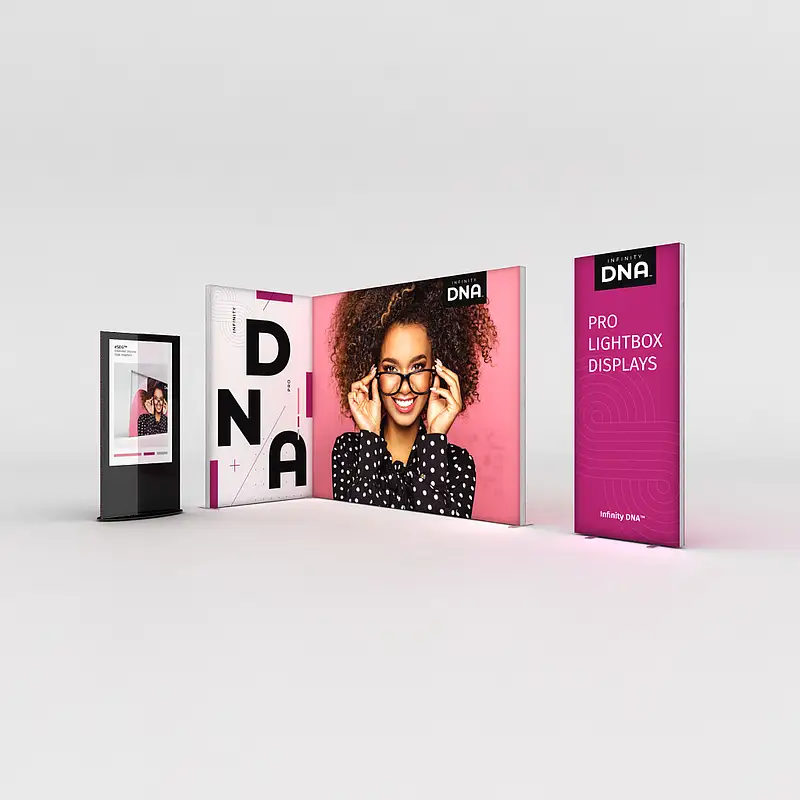
Infinity DNA™ Pro Lightboxes typically combine lightweight aluminium display systems with high-efficiency LEDs, either edge-lit or backlit behind tensioned textiles. Dye-sublimated graphics, finished as SEG fabric display lightbox panels, slot into the frame for a taut, crease-free surface and accurate colour reproduction. The units are designed as reusable LED display frames, enabling graphic swaps between campaigns without replacing the hardware. Many ranges are modular trade show lightboxes that connect seamlessly, allowing marketers to build full illuminated walls, corner kits or product zones as needed. This configuration suits brands that regularly adapt footprints from small shell schemes to larger open spaces.
How standard lightboxes compare
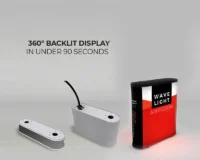
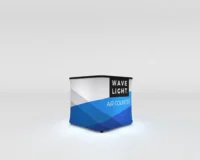
Standard lightboxes tend to rely on simpler LED strips or legacy fluorescent tubes housed in more basic frames. They still offer illuminated branding, but often with less even brightness, visible hotspots and fewer options for bespoke footprints or curved layouts. For reception areas, small retail corners or one-off events, a straightforward portable LED lightbox can nevertheless be a cost-effective starting point. However, changeovers may be slower if graphics require tools or multiple fixings, making rapid campaign rotation more challenging. Over time, limitations around tool-free lightbox assembly and transport weight can become significant for teams on tight schedules.
- Frequency of use and touring schedule across the UK and Europe
- Brand standards for colour accuracy, brightness and photography
- Available footprint, ceiling height and power access at venues
- Set-up resources, from in-house teams to contractor support
- Total cost of ownership, including graphics, transport and storage
For frequent activations, a premium illuminated display system such as an Infinity DNA™ Pro Lightbox is often justified by faster build times, higher visual impact and longer hardware lifespans. Marketers focused on sustainable fabric banner solutions also value the ability to refresh only the textile skins, rather than entire units, between seasonal pushes. In contrast, smaller organisations may find a basic frame sufficient when campaigns are infrequent and viewing distances are short. Whichever route they choose, many teams prefer working with a UK modular lightbox supplier that can advise on layouts, power planning and brand rollouts. To compare configurations and obtain tailored guidance, speaking with a specialist helps clarify whether pro-grade or standard solutions represent the smarter investment.